



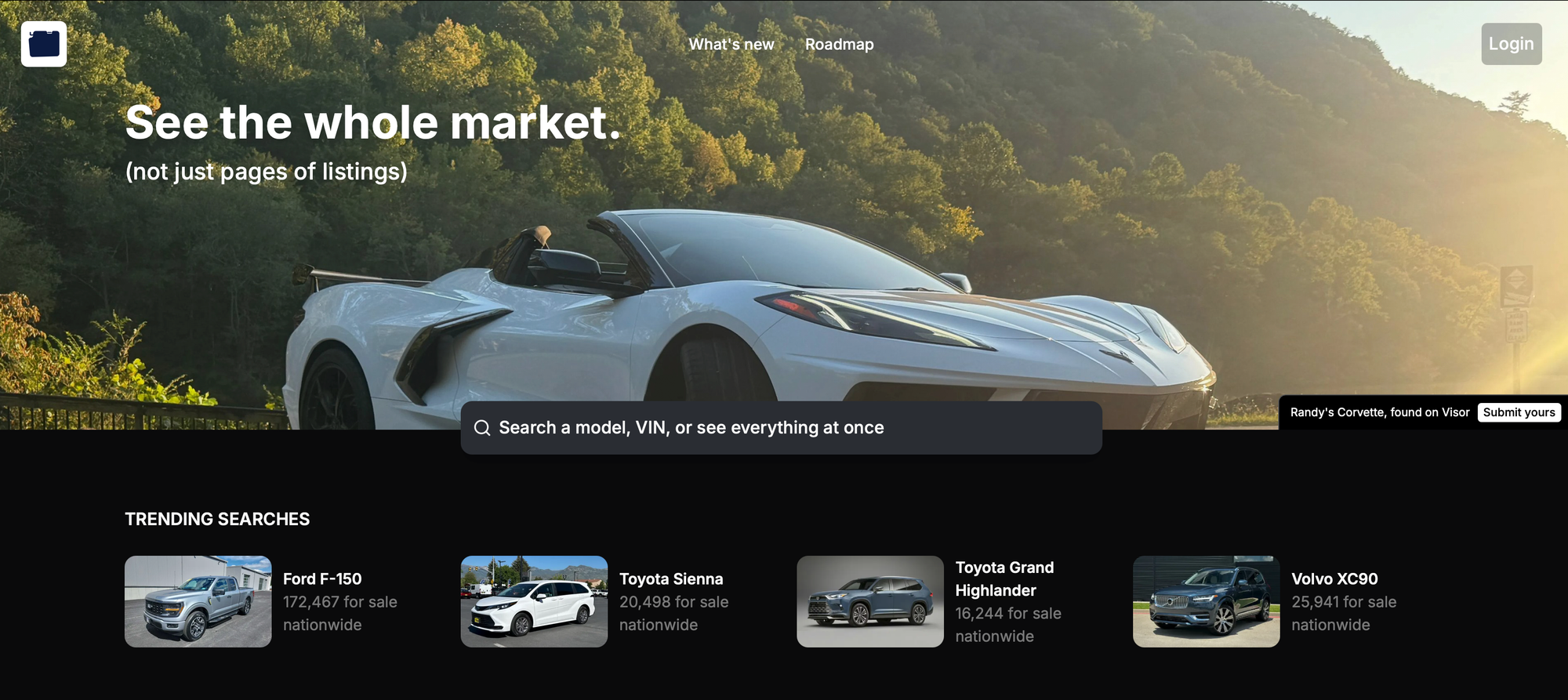
Last month, we were trying to help a buddy track down his next car - a clean E46 M3. He was using sites like KBB religiously, and thought that it would have all the insights into the used car market. Then we showed him what our friends at Visor.VIN had built.
The difference was pretty stark. KBB was suggesting that his target car was "fairly priced" at $28k. Visor had shown that the same listing was sitting for 73 days, started at $31k, and similar cars within 100 miles were selling for $24-26k. A big difference when you can put that money towards mods.
And that's when it clicked for us. Some of the more traditional pricing tools like KBB will only give you an estimate... where as Visor gives you actual reality.
Here's what we've learned about using Visor to actually find way better deals.
Start Wide, Then Focus
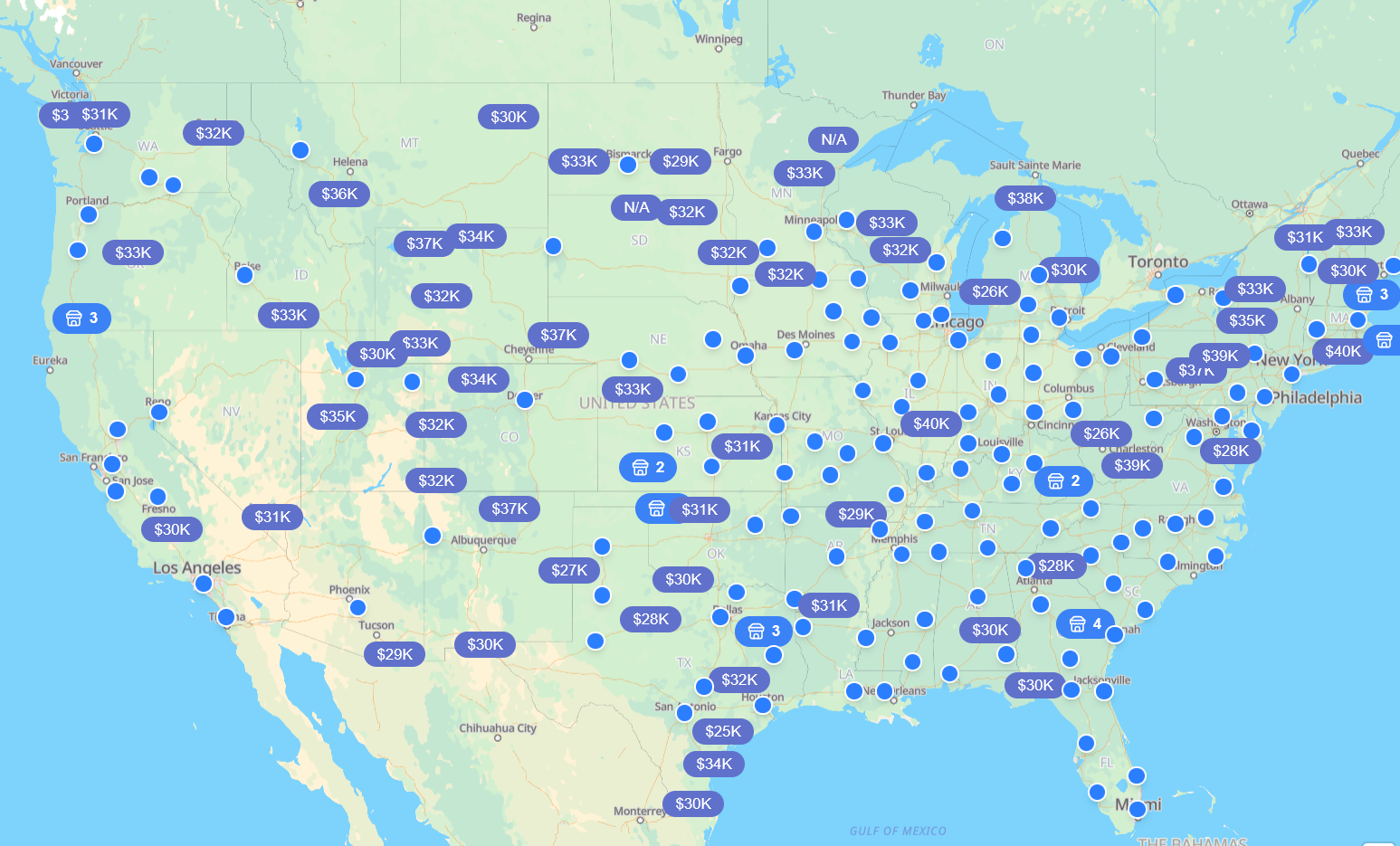
Most people look to search their immediate area and call it done. That's not the move. Visor's mapping feature shows you a much bigger picture, and car prices can vary dramatically (even if only just a few zip codes over).
We've seen $3k+ differences on identical cars between neighboring cities. These discrepancies are can most often be chalked up to market dynamics, and/or a dealer who's been sitting on inventory too long.
Set your radius to at least 100 miles initially. You might be surprised by what's out there. If you want the fuller picture, search nationwide.
The Time Factor Nobody Talks About
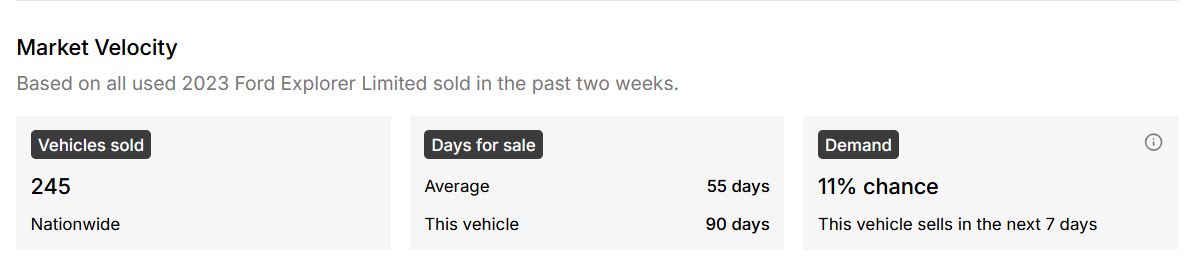
Like most sites, Visor shows you how long a car has been listed, but it differs significantly, and that's their secret sauce... where that data comes from. While nearly every other search tool will only connect to dealer systems (allowing dealers to run ads and gamify their listings), Visor listings are pulled directly from dealer sites which allows them to stay independent and keep bias out of listings and search results.
Visor then takes the raw data a step further by adding market context around it. For example, seeing that a 2023 Ford Explorer Limited has been for sale for 90 days is useful (slightly). But actually knowing that the average Explorer sells in just 55 days? That insight is unique. It immediately sparks the right questions: “Is there a mechanical issue causing it to sit?” or “Is this dealer padding the deal with hidden fees and add-ons?”
We've seen some cars drop $2-4k over a few months just by tracking them on the site. Patience pays off, but it helps when you have data to determine when to purchase.
Beyond the Sticker
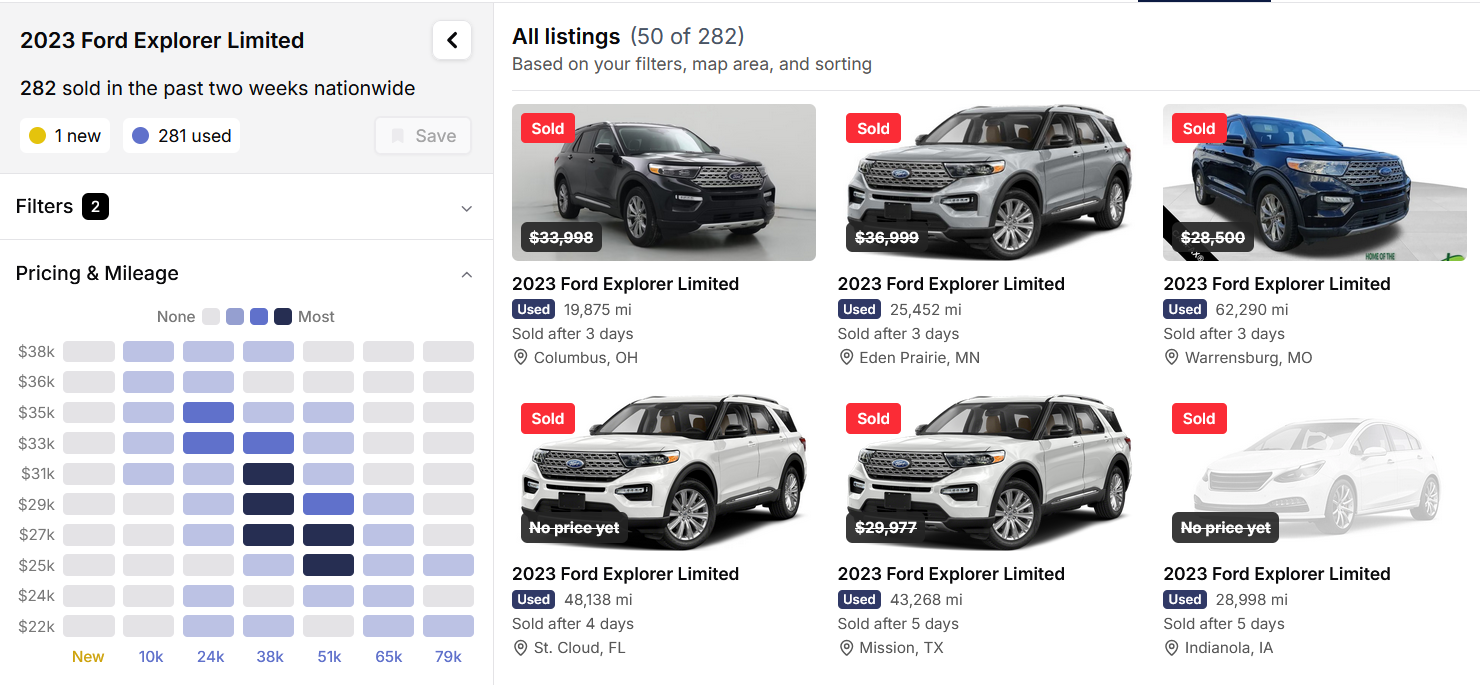
Here's something most pricing guides miss: market context. Visor shows you what's actually moving versus what's been collecting dust.
Maybe that rare color combo isn't as desirable as the seller makes it out to be. Maybe that trim level is overflooding the market. Maybe similar cars are selling faster at slightly lower prices.
Trust us, this context matters when you're negotiating
The Invoice Game
For new cars, everyone talks about getting close to invoice price... many don't know that invoice prices are actually just estimates. They don't account for incentives, holdback, or regional variations.
What Visor shows you is what dealers are actually accepting. Real transaction data beating theoretical calculations.
We've seen cases where "invoice" pricing tools suggested a deal was good, but Visor revealed similar cars selling for significantly less just because certain dealers were pushing volume that month.
Cross-Reference Everything
Don't abandon other tools entirely. Use Visor as your primary intel, then cross-check with KBB or Edmunds for additional perspective.
The sweet spot is when all your data sources align. When Visor shows a car's been sitting, KBB suggests it's overpriced, and you can see similar vehicles moving faster at lower prices... that's your negotiation ammunition right there.


Comments